
Shipping from China to Kazan
China → Kazan · via KZN air / Manzhouli rail · clearance by Federal Customs Service of Russia (EAEU regime)
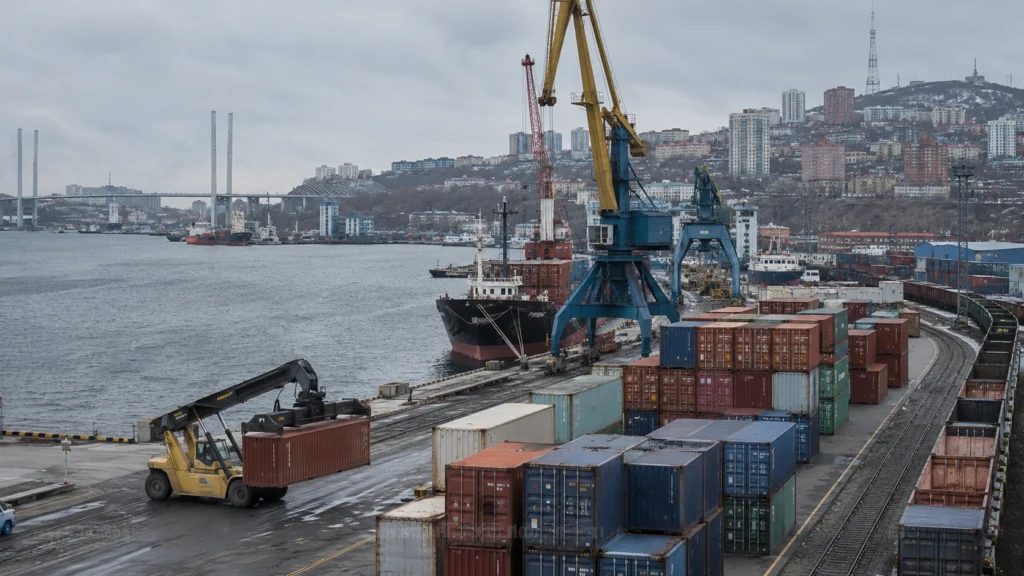
For buyers shipping into Kazan, the practical question is not the ocean or flight time but what happens after arrival. Kazan is Volga region manufacturing city; cargo enters through KZN air / Manzhouli rail, and allow +1 day for the inland leg on top of clearance.
Clearance itself is handled by Federal Customs Service of Russia (EAEU regime), and typical dwell at the gateway runs 3–10 days.
Routing and transit on this lane
Russia is served three ways from China and the choice matters more here than anywhere else: Vladivostok by sea in under a week then rail west, direct block trains through Manzhouli or Zabaikalsk to Moscow in about 14–20 days, or the long Suez routing to St Petersburg. Rail and Far East capacity are both frequently oversubscribed, so book earlier than the transit time alone would suggest.
| Air gateways used | SVO (Moscow Sheremetyevo), DME (Moscow Domodedovo), LED (St Petersburg) |
|---|---|
| Air transit, China to gateway | 2–4 business days |
| Sea gateways used | Vladivostok, Vostochny, Novorossiysk |
| Sea transit, China to gateway | Vladivostok 3–7 days; St Petersburg 40–55 days via Suez |
| Gateway serving Kazan | KZN air / Manzhouli rail |
| Inland leg to Kazan | +1 day from the gateway |
| Typical clearance / dwell | 3–10 days |
| Peak season to plan around | Sep–Nov |
What you will pay on arrival in Russia
Federal Customs Service of Russia (EAEU regime) assesses duty and tax on cargo arriving for Kazan consignees. Current regime: VAT 20%; EAEU common external tariff, typically 0–20%, plus recycling and excise levies on some categories, with a de-minimis position of EUR 200 for personal parcels under EAEU rules.
Conformity is the part most first-time importers underestimate: EAC conformity mark valid across the Eurasian Economic Union; Russian-language labeling required. Getting this wrong is expensive because it usually cannot be fixed after the cargo has landed.
Restrictions and known friction points for Russia: Export-control and sanctions screening is essential — dual-use goods, electronics and machinery require careful classification and counterparty checks before shipment. EAC certification and Russian labeling are mandatory. Payment routing should be confirmed before booking.
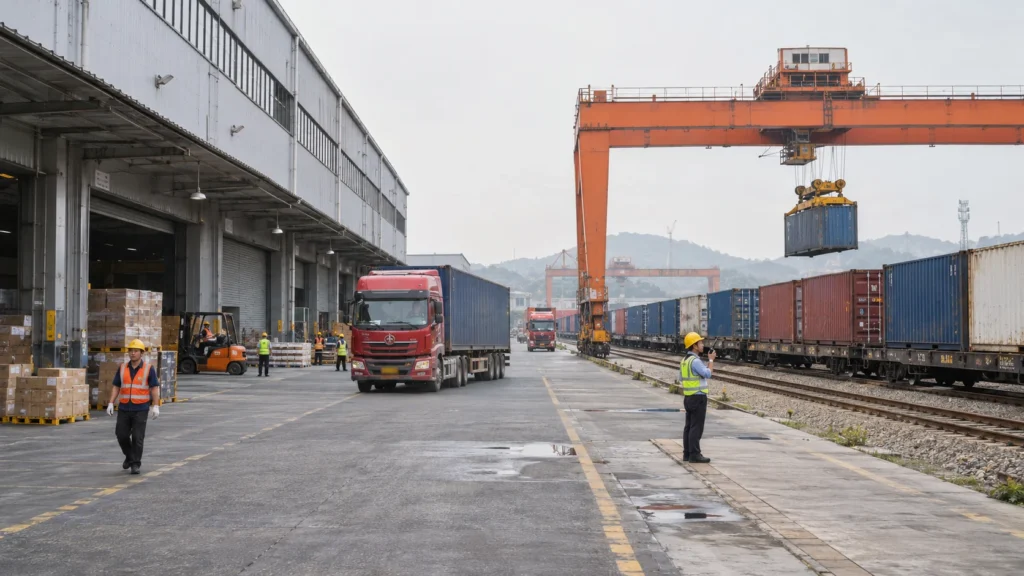
Air, sea or overland into Kazan?
| Mode | Transit to gateway | Best suited to |
|---|---|---|
| ✈️ Air Freight | 2–4 business days | time-critical, high-value and low-volume cargo |
| 🚢 Sea Freight | Vladivostok 3–7 days; St Petersburg 40–55 days via Suez | volume cargo where cost per kilo matters more than speed |
| 🚂 Rail Freight | Vladivostok 3–7 days; St Petersburg 40–55 days via Suez | inland destinations where sea is slow and air is expensive |
Transit shown is China departure to the Russia gateway and excludes the +1 day inland leg to Kazan and 3–10 days of clearance.
Before you book: Kazan checklist
- Budget for the inland leg: +1 day beyond gateway clearance to reach Kazan.
- Get the conformity paperwork moving early: EAC conformity mark valid across the Eurasian Economic Union; Russian-language labeling required.
- Compare gross weight against volumetric weight (L×W×H ÷ 6000) — the higher figure is what gets billed on air and express.
- Use ISPM-15 treated pallets. Untreated wood is the most common reason otherwise-clean cargo gets held.
- Declare lithium batteries, magnets, liquids and powders up front — retro-declaring after booking usually means re-planning the whole shipment.
- Confirm the consignee in Kazan can act as importer of record — Federal Customs Service of Russia (EAEU regime) will not release cargo to an unregistered party.
Mode guides for Kazan
Frequently asked questions
How long does shipping from China to Kazan take?
China to the Russia gateway is 2–4 business days by air, Vladivostok 3–7 days; St Petersburg 40–55 days via Suez by sea. On top of that, allow 3–10 days of clearance with Federal Customs Service of Russia (EAEU regime) and a +1 day inland leg to Kazan.
What duty and tax will I pay importing into Kazan?
Federal Customs Service of Russia (EAEU regime) applies: VAT 20%; EAEU common external tariff, typically 0–20%, plus recycling and excise levies on some categories. The de-minimis position is EUR 200 for personal parcels under EAEU rules. Under a DDP arrangement these are pre-paid, so nothing is collected on arrival in Kazan.
How is the chargeable weight calculated for Kazan?
We compare actual gross weight against volumetric weight — length × width × height in centimeters divided by 6000 for air — and bill the greater of the two, rounded up to the next kilogram. Light, bulky cargo is almost always billed on volume.
When is the busiest time on the China–Russia lane?
Space and rates tighten around Sep–Nov, plus the China-side windows of Chinese New Year in January or February and Golden Week in early October. Book one to two weeks earlier in those periods.
Can you deliver door-to-door in Kazan?
Yes. Delivery to a Kazan address is quoted as one figure covering freight, duty and tax owed to Federal Customs Service of Russia (EAEU regime), and the +1 day inland leg. Confirm whether your consignee wants the goods at a warehouse, a marketplace fulfillment center or a shop front, because the last-mile requirement differs.
What documents does Federal Customs Service of Russia (EAEU regime) require?
A commercial invoice with HS codes, a packing list, the bill of lading or air waybill, a certificate of origin where it lowers duty, and any product certification (EAC conformity mark valid across the Eurasian Economic Union; Russian-language labeling required). We prepare and file these as part of the service.
Other delivery cities in Russia
References & official sources
Duty rates, thresholds and conformity requirements for Russia change by ministerial decision, sometimes mid-year. The figures on this page are buyer-planning references, not a customs ruling — confirm the current position for your own HS code with Federal Customs Service of Russia (EAEU regime) or your broker before you ship.
- Federal Customs Service
- Eurasian Economic Union common tariff
- WTO — Tariff Profiles (applied MFN duty by country)
- IATA — Lithium battery shipping guidance (PI 965–970)
- World Bank — Logistics Performance Index
- ICC — Incoterms 2020 rules (DDP, DAP, FOB definitions)
- IPPC — ISPM 15 wood packaging standard
Page data last reviewed: November 2026.
Shipping by industry
This page covers the route and clearance picture for the destination. Packing, classification and the compliance step that actually holds a shipment depend on what you are sending — these guides cover that by commodity.
- Plastic Products Plastics, Rubber & Packaging
- Ceramic Tableware Glass & Ceramic Products
- Tableware Furniture & Home Products
- Display Stands Retail, Display & Commercial Fixtures
- Umbrellas Consumer Goods & Gifts
- Bearings Metal Products & Industrial Components
- Solar Panel New Energy, Power & Electrical
- Prefabricated Building Building Materials & Construction Products
- Pallet Wood, Bamboo & Paper Products
- Conveyor Belts Plastics, Rubber & Packaging
- Hotel Furniture Furniture & Home Products
- Textiles Textiles, Apparel, Footwear & Leather
Checking the Russia duty position yourself
Duty and tax figures on this page are planning estimates. The binding assessment is made by Federal Customs Service of Russia (EAEU regime) against your declared HS code at the time of entry; where the amount is material, verify the current rate through ITC Market Access Map before committing to an order.
Most landed-cost surprises trace back to classification rather than freight. the WCO Harmonized System defines the heading structure every customs administration builds on, and ITC Market Access Map will show you the duty a given heading attracts in this destination.
For ocean cargo, restricted commodities move under the IMO's IMDG Code, and the container has to be declared and stowed accordingly. Batteries, flammables and corrosives all have a compliant ocean path; what causes rolled bookings is finding out about them after the container is packed.
If this is your first shipment into Russia, the Russia Country Commercial Guide covers the practical import environment in more depth than a rate page reasonably can, and it is written by a party with no stake in your booking.
Watch: the process behind this route
This guide covers routing and clearance for Kazan. The video below covers the wider shipping process that sits around it.
Marine Insurance Explained - Understand the Cargo Insurance You're Getting — ABTS®. Published on YouTube by a third party; we link it because it explains the process well, not because we produced it or endorse the provider.
Customs clearance in Russia
Duty and tax position, certification, typical port dwell and what actually holds shipments at this border — plus who files the entry.
Russia clearance requirements →